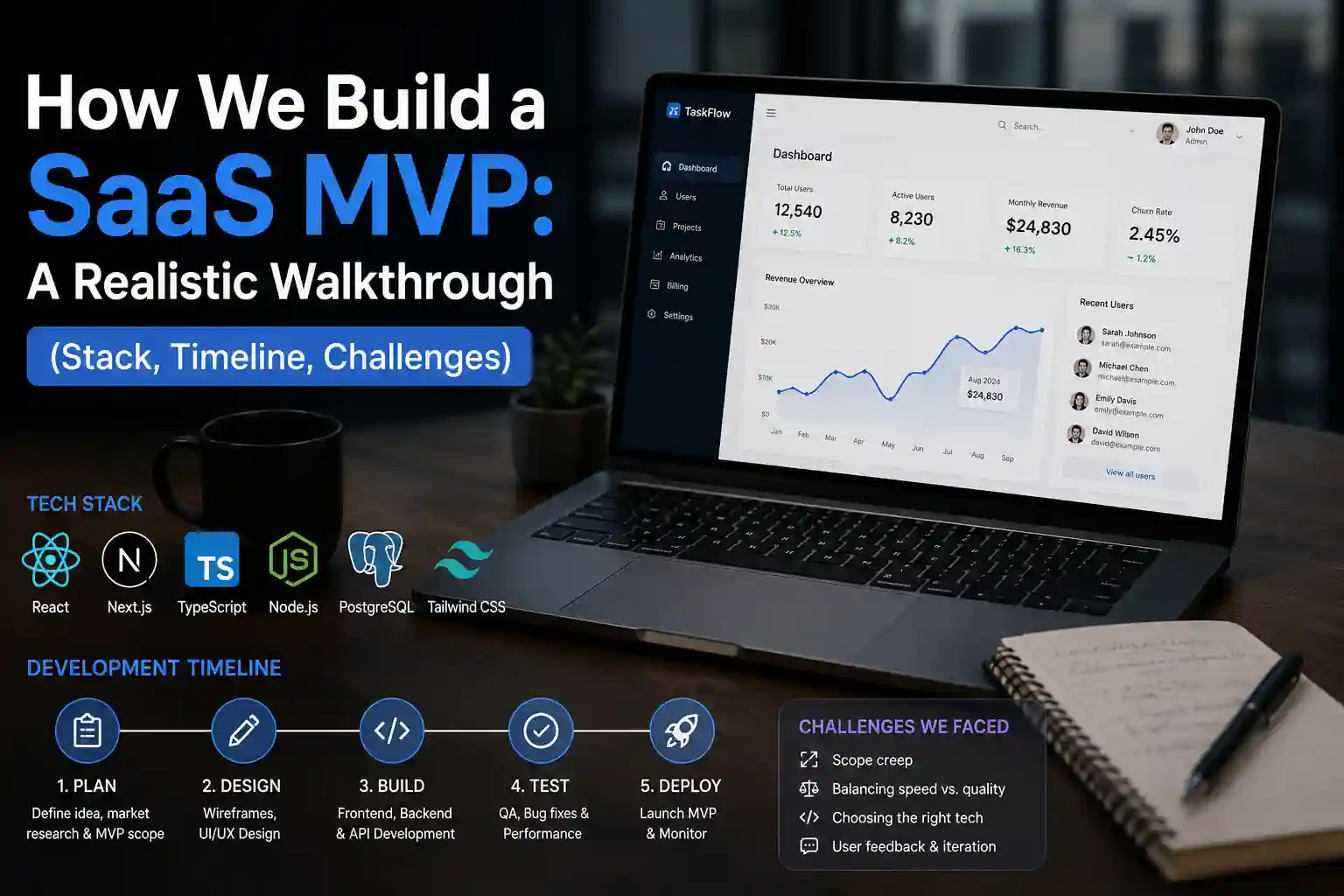
How We Build a SaaS MVP: A Realistic Walkthrough (Stack, Timeline, Challenges) | Yantrix Labs
A detailed walkthrough of how Yantrix Labs builds a SaaS MVP — the exact tech stack, sprint structure, timeline, common challenges, and what the final handover looks like.
Author
Yantrix Labs
Most agencies describe their process in marketing copy. This is a composite walkthrough of how we actually build a subscription SaaS platform — the real technical decisions, where sprints go off-plan, and what the handover looks like when we are done. Patterns drawn from multiple delivered projects.
The Tech Stack — and Why
Frontend
Next.js 15 + TypeScript
SSR for SEO, App Router for clean routing, strong TypeScript ecosystem
Styling
Tailwind CSS + shadcn/ui
Fast to build, consistent design system, fully customisable components
Backend / API
Node.js + Express / Hono
Same language as frontend reduces context-switching. REST for simplicity at MVP.
Database
PostgreSQL + Prisma ORM
Relational integrity for multi-tenant data. Prisma gives type-safe queries and clean migrations.
Billing
Razorpay Subscriptions
Best Indian payment provider for SaaS. Webhook-based plan management, UPI support.
Infrastructure
AWS or Railway + Docker
Railway for faster MVP deployments. AWS for scale and compliance. Docker from day 1.
Sprint-by-Sprint Build Plan (14-Week MVP)
Challenges That Come Up on Almost Every Build
The scope expands in week 6
After seeing the core feature working for the first time, clients almost always add "just one more thing." Each addition seems small but collectively shifts the timeline by 2–4 weeks.
How we handle it: Every scope change goes through a formal change request with a timeline impact note. The client decides: add it now (shift timeline) or defer to phase 2 (stay on plan).
Payment webhook edge cases
Razorpay webhooks can arrive out of order, arrive twice, or fail to arrive. The billing logic must be idempotent — processing the same webhook twice should not double-charge or double-grant access.
How we handle it: Webhook idempotency using event IDs stored in the database. Before processing any webhook, we check if it has already been processed. All failure scenarios scripted in test mode.
Multi-tenant data leaks during development
The most dangerous bug in a multi-tenant system is one tenant being able to access another tenant's data. This happens through missing WHERE tenant_id clauses in queries.
How we handle it: Tenant-scoping pattern established from day 1. Every data access goes through a scoped repository layer. We write specific tests confirming Tenant A cannot access Tenant B's data.
Client feedback delays
The most common cause of schedule overruns is not technical — it is waiting for client review. A sprint delivered on Friday that is reviewed the following Thursday loses a week of iteration time.
How we handle it: We set a 48-hour feedback SLA for every sprint demo. We also run 15-minute midweek check-in calls rather than weekly formal meetings — this catches misalignments before they become rework.
What the Handover Includes
Want to build your SaaS product with a team that does this every week?
Yantrix Labs is a web, mobile, and AI development agency based in Kolkata. We run the process described above for every project. Schedule a free scoping session and we will walk you through the plan for your specific product.
Start your project →Related Articles


Stay Updated
Get latest articles, tutorials and product insights delivered to your inbox.
No spam. Unsubscribe anytime.