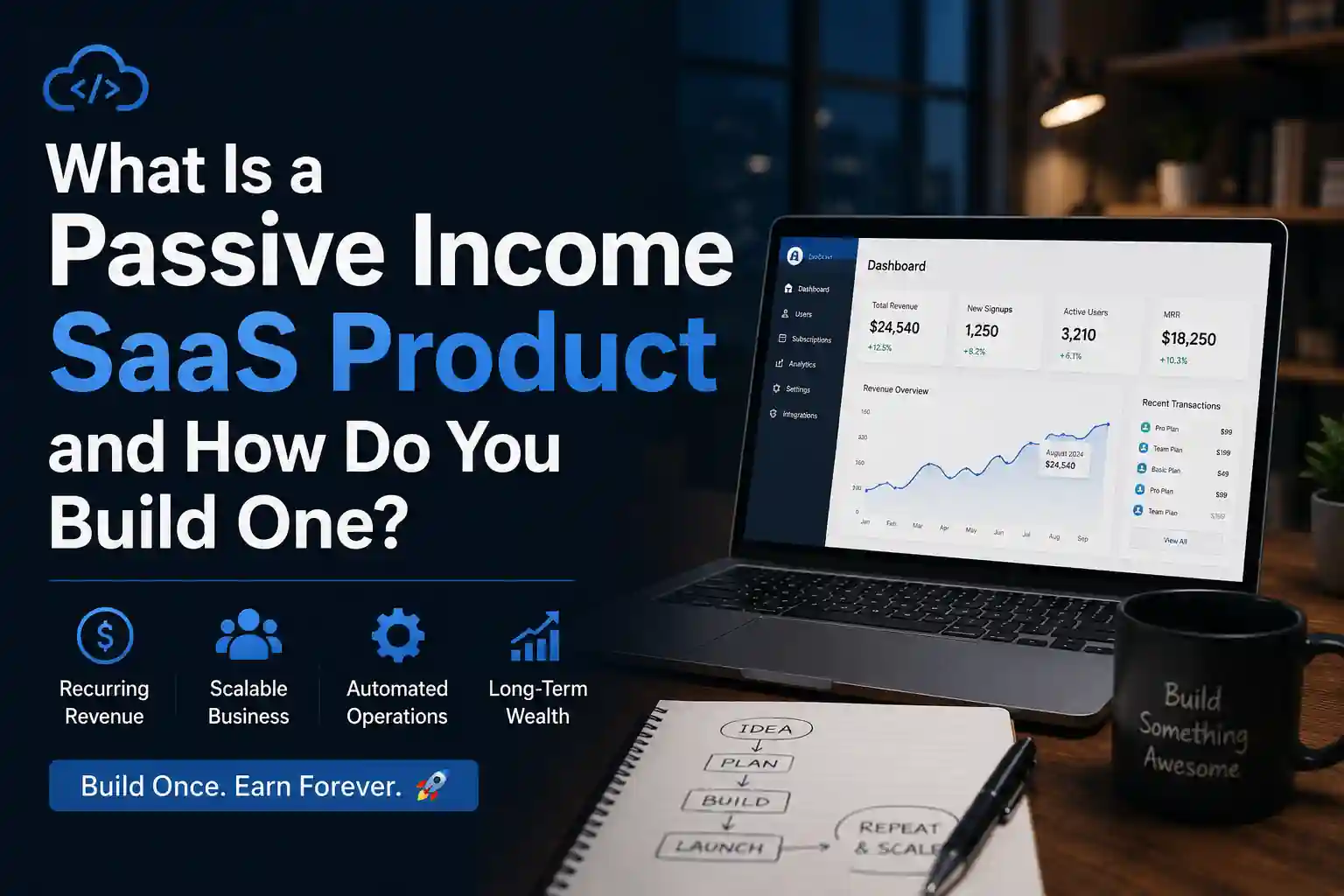
A passive income SaaS product is software that solves a recurring problem, charges a monthly or annual subscription, and earns revenue whether you are working or not. Building one takes upfront investment — but the economics compound over time in a way almost no other business model does.
A SaaS product is not truly passive — it requires customer support, maintenance, and ongoing marketing. But it is as close to passive as a software business gets: the code you build once continues to run, and customers continue to pay, without you delivering anything new each month.
What Makes a Good Passive Income SaaS
- Recurring problem: The customer's problem does not go away — they need the solution every month, which is why they pay a subscription
- Low churn: Customers who integrate your tool into their workflow are unlikely to cancel — switching cost makes them sticky
- Low marginal cost: Adding customer 1,000 costs almost nothing more than customer 10 — the software scales without proportional cost increase
- Automated delivery: The customer signs up, pays, and gets access — no human intervention in the core delivery
- Niche-specific: A narrow focus means lower acquisition cost, less competition, and higher willingness to pay
SaaS Ideas That Work Well for Indian Markets
| Niche | Problem Solved | Potential Pricing |
| Chartered accountants | Client document collection, ITR tracking, deadline reminders | ₹1,000–₹3,000/mo |
| Small clinics | Appointment booking, patient records, billing, reminders | ₹2,000–₹8,000/mo |
| E-commerce sellers | Inventory sync, order management, profit tracking | ₹1,500–₹5,000/mo |
| Coaching institutes | Batch management, fee collection, attendance, tests | ₹2,000–₹6,000/mo |
| Real estate agents | Lead tracking, property catalogue, follow-up automation | ₹3,000–₹10,000/mo |
| SMB HR / payroll | Attendance, leave management, salary calculation | ₹100–₹300/emp/mo |
How to Build It: Phase by Phase
Phase 1
Validate before you build (4–6 weeks, ₹0–₹50,000)
Interview 20 people matching your target customer. Get 3–5 to commit to paying (even informally). Build a landing page with a waitlist. If you cannot get 20 signups with ₹500 in ads, the idea needs to be sharpened.
Tools: Webflow for landing page · Razorpay for pre-order · Google Analytics
Phase 2
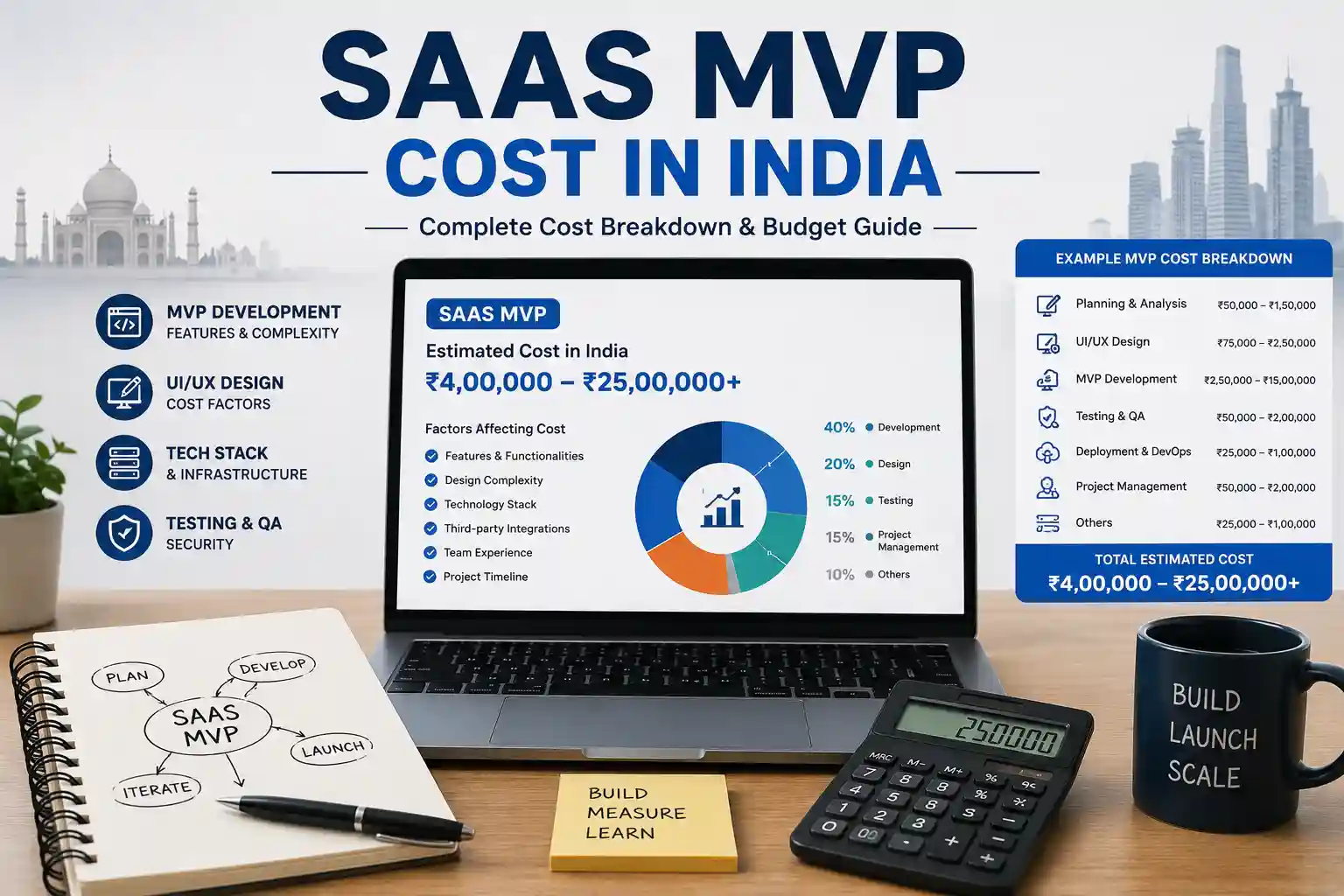
Build a minimal SaaS MVP (10–16 weeks, $12,000–$25,000)
Core feature only: the one thing that solves the validated problem. User auth, subscription billing (Razorpay), basic dashboard, and an admin panel. No extra features — they distract from the core and inflate cost.
Stack: Next.js + Node.js + PostgreSQL · Razorpay subscriptions · AWS deployment
Phase 3
Get first 10 paying customers (weeks 16–24)
Manually onboard your first 10 customers. Get on calls. Watch them use the product. Fix what breaks. Do not automate onboarding yet — the friction teaches you what the product needs to do better.
Target: 10 paying customers, <30% monthly churn, at least one upgrade or expansion
Phase 4
Build the growth loop (month 6+)
Once churn is stable (<10%/month), build your acquisition channel: SEO content, Google Ads, referral programme. Automate onboarding emails, in-app guidance, and support FAQs.
Goal: MRR growing 15–20% month-on-month from organic and paid acquisition
Realistic Revenue Model
| Scenario | Customers | ARPU/mo | MRR | Annual Revenue |
| Month 6 | 20 | ₹2,000 | ₹40,000 | ₹4.8 lakh |
| Month 12 | 80 | ₹2,500 | ₹2,00,000 | ₹24 lakh |
| Month 24 | 300 | ₹3,000 | ₹9,00,000 | ₹1.08 crore |
| Month 36 | 800 | ₹3,500 | ₹28,00,000 | ₹3.36 crore |
Realistic note: Most SaaS products take 18–24 months to reach meaningful revenue. This is not a get-rich-quick strategy — it is a compounding asset that builds over 2–4 years. The businesses that succeed are the ones that survive the first year with enough customers to learn from.
Ready to build your SaaS product?
Yantrix Labs helps founders validate and build SaaS products — from initial scoping through to a deployed, subscription-ready product. Schedule a free call to discuss your idea.
Discuss your SaaS idea →